At the foot of the Atlas Mountains, where dry hills stretch under a hard, open sky, there is a kind of land that asks a question before it gives anything back:
Do you truly mean it?
In this arid region—beautiful, demanding, and uncompromising—Dar Idrissi began as something rarer than a business plan. It began as a conviction. A belief held long before there were rows of trees, long before there was certainty of water, long before the estate had a name.
That conviction belonged to Maître Ahmed Taoufik Idrissi.
After a career in law, he retired in Casablanca and chose to begin again on this land – drawn not by ease, but by a deeper certainty about place and legacy.
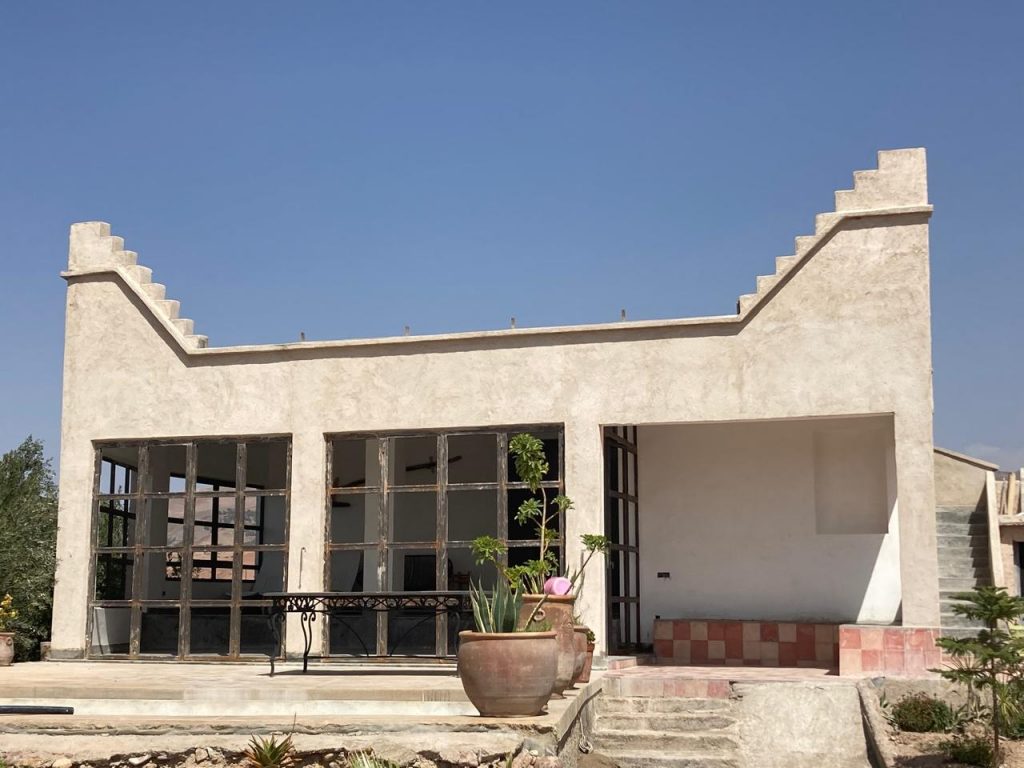
The decision that came before the farm
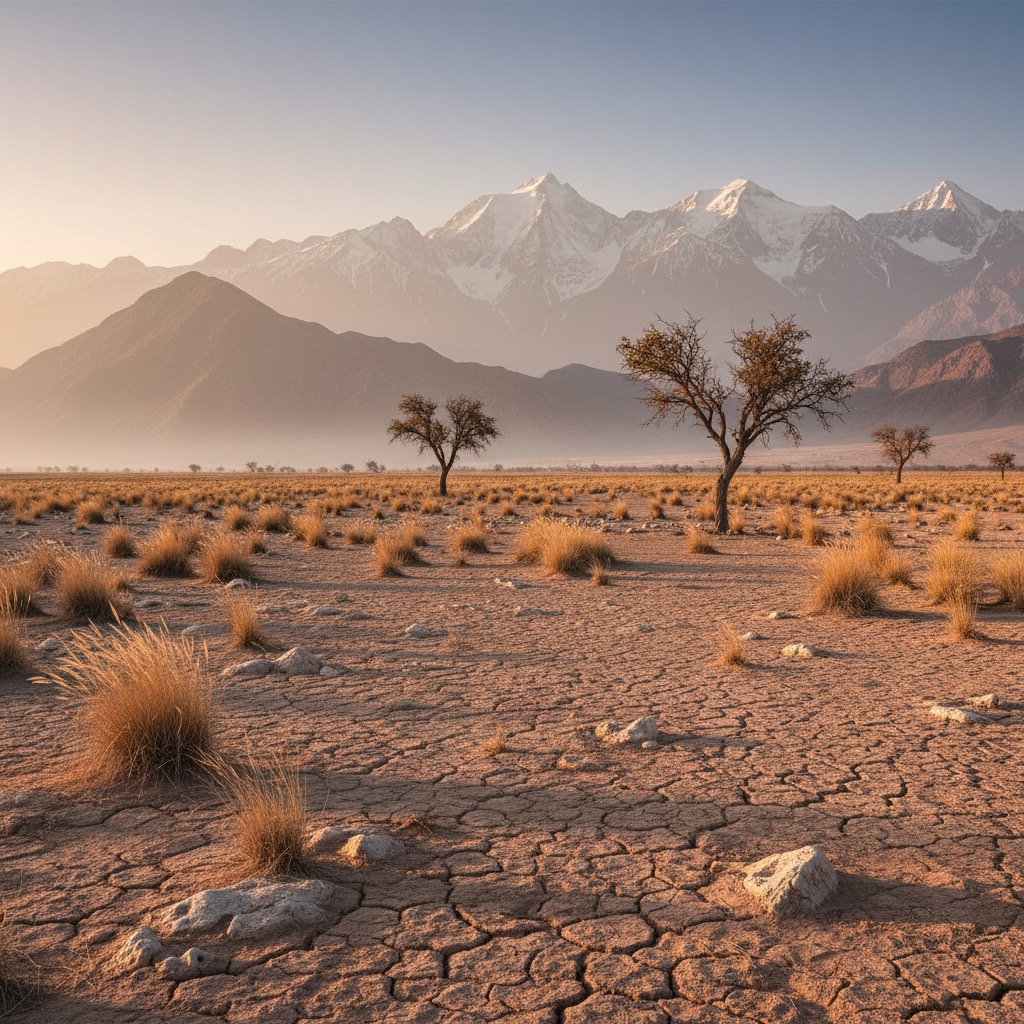
When he first looked at the land, nothing about it promised convenience. The soil was dry. The climate was exacting. The hills held their distance.
And yet he saw what most people wouldn’t: possibility.
Not because the conditions were favourable—because they weren’t. But because the geography spoke to him. Above the parcel, the Atlas Mountains rose, their peaks often dusted with snow. To many, they were simply part of the horizon.
To him, they were a signal.
Somewhere beneath the surface, he believed there was water—living water—waiting to be found. Not guaranteed, not obvious, not immediate. But possible.
So he made a decision that still feels audacious when stated plainly:
He planted olive trees before he had found water.
Not out of naivety. Out of faith.
Faith in nature. Faith in the land. Faith in the Atlas, whose snow-capped summits seemed to suggest that the earth had more to give—if you were willing to earn it.
Water by hand, tree by tree
The early years were not romantic. They were real.
Each young tree needed water, and there was no well yet—no pipeline, no easy source, no system to rely on.
So water arrived by cisterns.
It was bought. Transported. Unloaded. Poured. Repeated.
Tree by tree, each one was watered by hand, with the kind of patience that can only come from someone building something meant to last. In those first seasons, the grove didn’t grow because the land was generous.
It grew because the work was.
At the same time, another kind of labour continued beneath the surface: the well was being dug. Day after day, the ground was opened—slowly, insistently—without knowing exactly when it would yield.
And then, one day, it did.
When the water appeared
The water didn’t arrive politely.
It arrived as proof.
Abundant. Cold. Pure.
Naturally filtered water from the Atlas—mountain water shaped by time and geology, born from the life of the range. In that moment, the land changed. What had been a bold bet became something that could take root with stability.
The grove found its rhythm.
The farm became more than an idea.
And Dar Idrissi, in the truest sense, began.
A Moroccan terroir, chosen on purpose
From the beginning, one principle guided the estate, and it never changed:
A Moroccan olive, for a Moroccan oil.
There was never a desire to imitate another country’s profile or chase someone else’s identity. The ambition was the opposite: to express a terroir honestly—to let Morocco speak through the oil.
That is why the Haouzia variety became an obvious choice.
Haouzia is emblematic of Moroccan terroir: rustic, expressive, deeply tied to its soil, and capable—when treated with seriousness—of producing an oil with character. An oil that is structured and elegant. An oil that carries energy and presence.
Year after year, the trees grew stronger. The grove matured. And the project grew beyond the founder.
It became a family story.
A legacy that becomes a family craft
Over time, the children drew closer to their father.
Not only to the place—but to the practice.
Knowledge began to move through the family the way it often does in real legacy: not as a formal lesson, but through repetition, observation, and time spent side by side. Gestures became more precise. Decisions became more refined. The instinct of the founder evolved into a method shared by the family.
The estate was no longer only a place of cultivation.
It became a project of transmission.
A legacy you could feel in the way the work was done—more carefully each year, more intentionally, more faithfully.
The birth of a signature: the Dar Idrissi method
Within that continuity, the signature of Dar Idrissi was born.
Not as marketing.
As a recipe in the oldest sense of the word: a method passed on, protected, and refined.
It rests on a principle that sounds simple—but is exacting in execution:
The controlled blend of maturities.
Because in olives, maturity is not a single moment. It is a spectrum. And each stage carries a different gift.
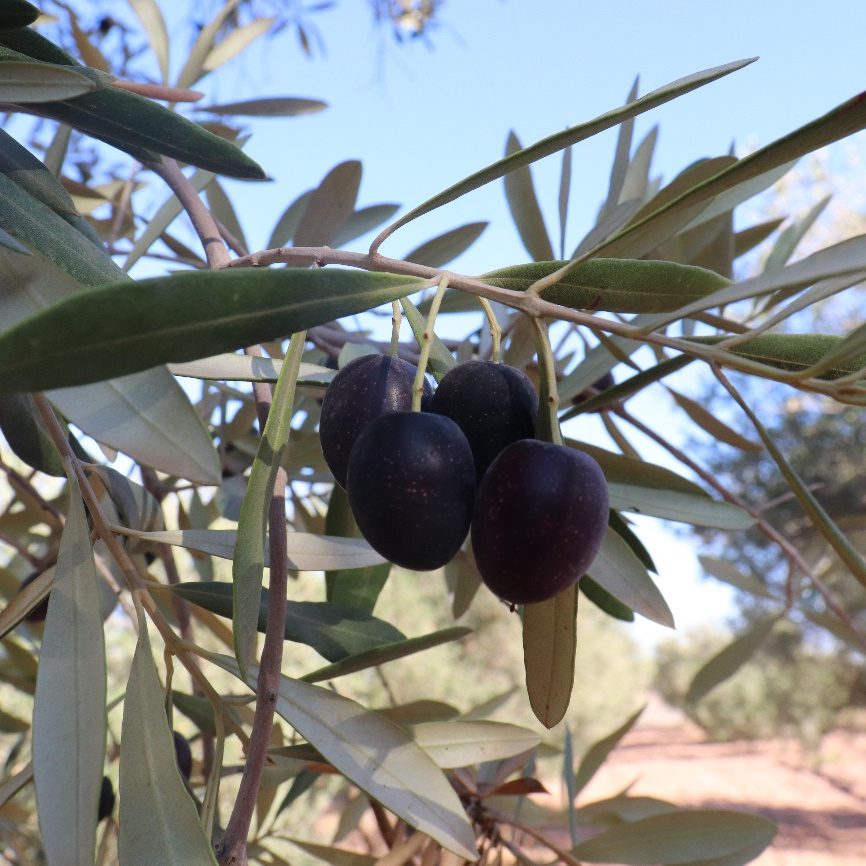
Dar Idrissi is built around a mastered assembly of three maturities:
- Green olives, for freshness and vitality
- Red olives, for balance and roundness
- Black olives, for depth and length on the palate
Each stage brings its own nuance—its own energy, its own complexity. The oil becomes not just an extraction, but a composition.
It is this precise assembly—these olives, harvested and pressed with care—that creates the identity of Dar Idrissi: a profile that feels alive, structured, and long on the finish.
This method, transmitted within the family, remains the quiet heart of the estate’s extra virgin olive oil.
An oil of conviction
Today, Dar Idrissi tells a story that is both simple and rare:
The story of a man who believed in land that did not promise him anything.
The story of a family that built around that belief.
The story of a Moroccan terroir expressed without compromise.
Every drop carries:
- the discipline of an arid climate,
- the freshness of Atlas mountain water,
- and the patience of work passed down over time.
This is not just olive oil.
It is origin. It is memory. It is signature.